

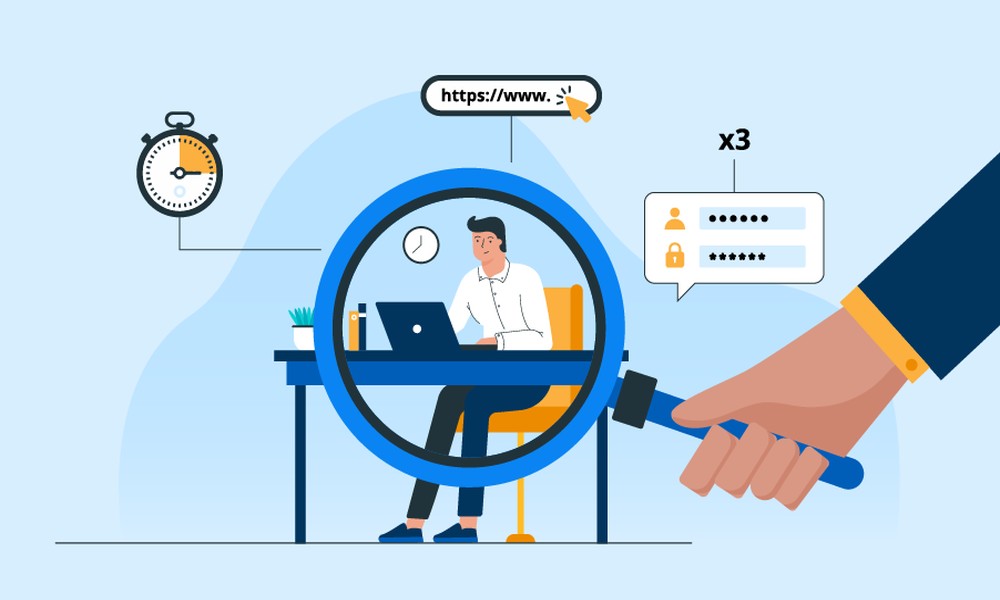
How does awareness change employee behaviour?
When employees know monitoring is active, their on-screen behaviour shifts toward work-assigned tasks and away from activity that falls outside contracted responsibilities. The knowledge that application usage, browser history, and session activity are being recorded changes how staff allocate their working hours without a supervisor needing to intervene directly. for employee monitoring software, visit empmonitor.com, which records productive, unproductive, and neutral hours across every active session, making the output of each working hour visible to management in structured reports. Off-task browsing reduces when employees are aware that URL records are retained and categorised. Time spent on non-work applications drops when application usage logs document every program opened during a session. These behavioural shifts occur because monitoring creates a consistent, documented record that applies to every enrolled user across every shift, rather than only during periods when a supervisor happens to be present.
How productivity shifts when monitored?
Productivity in monitored environments shifts upward when employees know their active and idle hours are recorded separately rather than counted as a single session total. Employees who understand that idle time appears in reports separately from productive hours are less likely to engage in voluntary inactivity during contracted hours. Extended inactivity is reported in daily and weekly productivity reports by idle time tracking. Session data are used to compile active hour records, which provide management with a factual breakdown of output per employee that observation-based supervision cannot provide with the same consistency or coverage.
Attendance patterns improve with awareness
Attendance patterns become more consistent when employees know login and logout timestamps are recorded automatically rather than submitted manually. Late arrivals, early departures, and extended breaks that fall outside contracted hours appear in attendance logs derived directly from device session activity rather than from self-reported timesheets.
- Login and logout timestamps record every session start and end automatically across all enrolled devices.
- Idle time during shifts is logged separately, identifying extended breaks that reduce productive working hours.
- Attendance reports compile session data across defined periods, covering patterns per employee over weeks and months.
- Custom alerts notify supervisors when login activity falls outside expected shift windows for enrolled users.
- Leave records managed within the same platform align attendance data with approved absence periods without manual cross-referencing.
Attendance accountability through recorded session data removes the ambiguity that manual timesheets introduce, producing records that reflect what actually happened during each contracted working period.
Workplace accountability increases through monitoring
Workplace accountability rises when employees know their session activity produces a documented record that management can retrieve at any point, rather than relying on observation or memory. Each enrolled user’s application usage, browser history, screenshot logs, and keystroke records sit within the platform as a retrievable audit trail covering every session from login to logout. Individual dashboard access lets employees view their own recorded activity, which reduces disputes over reported output figures during performance reviews and assessment cycles. Monitoring data are reviewed based on factual session records, not impressions formed during periodic walkthroughs.
Observation aligns behaviours closer with contractual responsibilities, attendance records become more consistent, productivity increases, and workplace accountability is based on documented session data rather than selective observation.
