

Key Takeaways
- UV curing equipment can accelerate production cycles, allowing manufacturers to cure coatings, inks, adhesives, and other materials in seconds or minutes instead of waiting for traditional drying processes.
- Reduced energy consumption can lower operating costs, as UV curing often requires less energy than conventional thermal curing methods and can minimize the need for extended heating and cooling.
- UV curing systems offer exceptional versatility, supporting applications across industries such as automotive, electronics, packaging, printing, medical devices, and industrial manufacturing.
- Customizable UV curing solutions can improve production precision, allowing manufacturers to adjust curing intensity, wavelength, exposure time, and system configuration for specific materials and applications.
- UV LED technology can improve efficiency and reduce maintenance, offering longer service life, instant on/off capabilities, and more consistent curing performance than many traditional UV lamp systems.
- UV-cured products can deliver excellent durability, providing resistance to wear, chemicals, scratches, and environmental exposure when the appropriate materials and curing conditions are used.
- Choosing the right UV curing method is essential, with spot curing supporting precision applications and area curing providing efficient coverage for larger surfaces and high-volume production.
How UV Curing Equipment Can Transform Your Production
Modern manufacturers are under constant pressure to improve speed, control costs, maintain product quality, and meet increasingly demanding customer expectations. Traditional curing and drying processes can create bottlenecks, consume substantial energy, and require significant floor space.
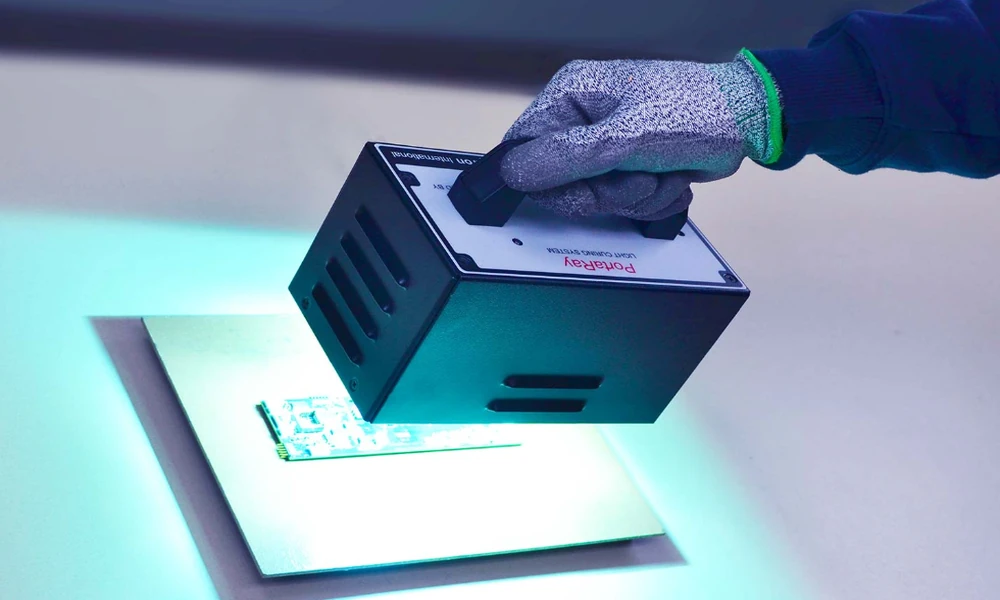
This is where uv curing equipment can make a meaningful difference.
By using ultraviolet light to initiate a rapid chemical reaction in specially formulated coatings, inks, adhesives, and other materials, UV curing systems can help manufacturers improve production efficiency while maintaining consistent results.
The technology offers benefits that extend far beyond faster drying. From reducing energy consumption to improving product durability and supporting highly precise applications, UV curing can become an important part of a modern manufacturing strategy.
Here are five major benefits that can help transform production operations.
Faster Production Cycles and Increased Throughput
Speeding Up Production Without Sacrificing Quality
One of the most significant advantages of UV curing technology is its ability to dramatically accelerate production processes.
Traditional curing methods may require products to remain in ovens or drying areas for extended periods. Depending on the material and process, this can create bottlenecks and slow down the movement of products through the manufacturing line.
UV curing works differently. When exposed to the appropriate UV wavelength and intensity, UV-curable materials can undergo a rapid curing reaction. In many applications, the material can be cured almost immediately after exposure.
This can help manufacturers:
- Reduce curing and drying times
- Increase production throughput
- Shorten overall manufacturing cycles
- Reduce work-in-progress inventory
- Move finished products to packaging or shipping faster
For high-volume manufacturing operations, even small improvements in cycle time can have a significant impact on overall productivity.
Improving Production Flow
Faster curing can also improve workflow throughout the facility. Products do not necessarily need to sit for long periods while coatings, adhesives, or inks dry.
This can help businesses reduce production bottlenecks and make better use of available floor space.
For example, a manufacturer producing coated components may be able to move products directly from application to the next production stage once curing is complete. This creates a more streamlined process and can help increase output without requiring a proportional expansion of the facility.
The result is a production environment that is faster, more responsive, and potentially more competitive.
Lower Energy Consumption and Operating Costs
Reducing Energy Requirements
Energy efficiency is another major advantage of UV curing technology. Traditional thermal curing systems often require substantial amounts of energy to heat ovens, air, or production environments to the temperatures necessary for curing.
UV curing systems can reduce this energy demand because they deliver energy directly to the material through ultraviolet light.
Depending on the specific application and process, manufacturers may benefit from:
- Lower energy consumption
- Reduced heating requirements
- Less heat loss
- Lower cooling demands
- Reduced production costs
The actual savings will vary depending on factors such as production volume, curing method, equipment configuration, and the existing manufacturing process. However, businesses that replace energy-intensive thermal systems with appropriately designed UV curing processes may achieve meaningful operational savings.
Supporting More Sustainable Manufacturing
Lower energy consumption can also support environmental goals.
Manufacturers looking to reduce their energy usage and carbon footprint may find UV curing technology useful as part of a broader sustainability strategy.
UV LED systems can be particularly attractive because they typically operate more efficiently than many traditional UV lamp technologies and do not require lengthy warm-up periods.
When combined with reduced production waste and faster processing, these improvements can help businesses move toward more efficient manufacturing operations.
Versatile Applications Across Multiple Industries
Supporting Automotive, Electronics, and Packaging Production
UV curing technology is not limited to one manufacturing sector. Its versatility makes it suitable for a broad range of industrial applications.
In the automotive industry, UV curing can be used for certain coatings, adhesives, and finishing applications. The technology can help manufacturers achieve rapid curing while maintaining precise control over the process.
In electronics manufacturing, UV-curable materials may be used for protective coatings, bonding, encapsulation, and other applications where controlled curing is essential.
The packaging and printing industries also benefit from UV curing. UV-curable inks and coatings can be cured rapidly, helping printed materials move through production more quickly.
Common applications include:
- Automotive: Coatings, adhesives, and specialized finishes
- Electronics: Protective coatings, encapsulants, and bonding applications
- Packaging: Inks, labels, and surface coatings
- Printing: Commercial printing and specialty graphics
- Medical Devices: Certain coatings and bonding applications
- Industrial Manufacturing: Adhesives, coatings, and component assembly
This broad range of uses makes UV curing an attractive technology for manufacturers seeking flexible production solutions.
Adapting to Different Materials and Substrates
Another advantage is the ability to use UV curing with various substrates and material types.
Depending on the formulation and application, UV-curable materials can be used with substrates such as:
- Plastics
- Glass
- Metals
- Wood
- Paper
- Composite materials
Manufacturers should evaluate compatibility carefully and conduct appropriate testing before implementing a new curing process.
The right combination of material formulation, UV wavelength, intensity, and exposure time can help achieve consistent curing results.
Greater Precision and Customization
Tailoring UV Curing to Specific Production Requirements
Manufacturing processes often have unique requirements. A system that works perfectly for one application may not be suitable for another.
UV curing technology provides flexibility by allowing manufacturers to configure curing systems according to their specific production needs.
- UV wavelength
- Light intensity
- Exposure time
- Curing distance
- Light distribution
- System configuration
These adjustments can help manufacturers achieve better control over the curing process.
For businesses working with delicate components or complex product designs, precision can be especially important. Controlled UV exposure can help target specific areas while minimizing unnecessary exposure to surrounding materials.
Spot Curing vs. Area Curing
Two common approaches are spot curing and area curing.
Spot curing is generally suited to applications requiring precise treatment of small or specific areas. It is commonly used where accuracy is more important than broad coverage.
Area curing is better suited to larger surfaces and higher-volume applications where consistent UV exposure across a broader area is required.
The right choice depends on factors such as:
- Product size
- Production volume
- Material characteristics
- Required curing speed
- Application precision
- Available production space
Manufacturers should evaluate these factors before selecting a curing system.
Improving Consistency and Quality Control
Precision also contributes to quality control. A properly configured UV curing system can deliver consistent exposure across repeated production cycles.
This can help reduce variations in finished products and improve process reliability.
However, achieving consistent results requires proper equipment calibration, regular maintenance, and careful control of the curing parameters.
Improved Product Durability and Reduced Maintenance
Creating More Durable Finished Products
The benefits of UV curing do not end when the production process is complete. Properly cured products can offer excellent performance and durability depending on the formulation and application.
UV-cured coatings, inks, and adhesives may provide resistance to factors such as:
- Scratches
- Wear and abrasion
- Chemicals
- Moisture
- Environmental exposure
- Discoloration
Improved durability can help manufacturers produce goods that maintain their appearance and performance for longer periods.
This can contribute to fewer product failures, lower warranty claims, and greater customer satisfaction.
Supporting Brand Reputation
Product quality has a direct relationship with brand reputation.
When customers receive products that perform reliably and maintain their appearance over time, they are more likely to view the manufacturer positively.
For businesses operating in competitive markets, consistent product performance can become a significant differentiator.
UV curing can support this goal by helping manufacturers achieve reliable curing results and durable finishes when the appropriate materials and processes are used.
The Role of UV LED Technology in Modern Production
How UV LEDs Are Changing Curing Systems
UV LED technology has become an important development in the evolution of UV curing.
Traditional mercury-based UV lamps have been widely used for many years, but UV LEDs offer several potential advantages for modern manufacturing environments.
These may include:
- Instant on/off operation
- Longer service life
- Lower energy consumption
- Reduced heat generation
- Less frequent replacement
- Lower maintenance requirements
- Consistent performance
Because UV LEDs can be turned on and off instantly, manufacturers may avoid the warm-up and cool-down periods associated with some traditional lamp systems.
This can contribute to more efficient production workflows and improved equipment availability.
Reducing Maintenance Requirements
Maintenance requirements can have a significant effect on production costs and downtime.
UV LED systems generally have long operating lifespans, which can reduce the frequency of lamp replacement compared with some conventional technologies.
However, all UV curing equipment still requires appropriate maintenance. Operators should follow manufacturer recommendations for cleaning, inspection, calibration, and performance monitoring.
Regular maintenance helps ensure that the system continues to deliver the required UV intensity and curing performance.
Choosing the Right UV Curing System for Your Production
Selecting a UV curing system requires careful consideration of the manufacturing process.
Before investing in new equipment, manufacturers should evaluate:
- Type of material being cured
- Required curing speed
- Production volume
- Product dimensions
- Required UV wavelength
- Available installation space
- Automation requirements
- Maintenance expectations
- Energy efficiency goals
Manufacturers should also consider whether the system needs to be integrated into an existing production line or operated as a standalone solution.
A properly designed system should fit naturally into the production workflow rather than create new bottlenecks.
Integrating UV Curing Into Existing Production Lines
Many UV curing systems can be customized for integration with existing manufacturing equipment.
Depending on the application, a system may be incorporated into:
- Conveyor-based production lines
- Automated assembly systems
- Robotic manufacturing cells
- Printing equipment
- Packaging lines
- Specialized production machinery
Successful integration requires careful planning. Manufacturers should consider product speed, curing distance, UV exposure, safety requirements, and compatibility with existing automation systems.
Working with experienced equipment providers and conducting production trials can help businesses identify the most appropriate configuration.
Final Thoughts
UV curing technology can provide manufacturers with a powerful combination of speed, efficiency, flexibility, precision, and durability.
The five key benefits include:
- Faster Production: Rapid curing can reduce cycle times and increase throughput.
- Lower Energy Consumption: Efficient curing processes can help reduce energy use and operating costs.
- Greater Versatility: UV technology can support applications across automotive, electronics, packaging, printing, and other industries.
- Improved Precision: Customizable curing systems can be adapted to specific materials, products, and production requirements.
- Enhanced Product Durability: Properly cured products can offer strong resistance to wear and environmental factors.
As UV LED technology continues to advance, manufacturers have more opportunities to improve production processes while reducing energy consumption and maintenance requirements.
For businesses seeking to modernize their operations, the right UV curing solution can become an important investment in productivity, quality, and long-term manufacturing performance.
FAQ
What are the main benefits of UV curing equipment?
The primary benefits include faster production cycles, lower energy consumption, greater process flexibility, improved curing precision, and enhanced durability of finished products.
How does UV curing speed up production?
UV curing can initiate a rapid chemical reaction in specially formulated materials, allowing coatings, inks, and adhesives to cure much faster than many traditional drying methods. This can help manufacturers increase throughput and reduce production bottlenecks.
Is UV curing more energy-efficient than traditional curing?
In many applications, UV curing can use less energy than conventional thermal curing because it does not require prolonged heating of ovens or large production areas. Actual energy savings depend on the specific equipment and manufacturing process.
What industries use UV curing technology?
UV curing is used in many industries, including automotive, electronics, packaging, printing, medical device manufacturing, and general industrial production.
What is the difference between spot curing and area curing?
Spot curing is designed for precise curing of small or targeted areas, while area curing is intended to provide broader UV exposure for larger surfaces or higher-volume production applications.
Are UV LED curing systems better than traditional UV lamps?
UV LED systems can offer advantages such as longer operating life, instant on/off operation, lower maintenance requirements, and improved energy efficiency. However, the best choice depends on the specific application and material requirements.
What materials can be cured using UV technology?
Depending on the formulation, UV-curable products can be used with materials such as plastics, glass, metals, wood, paper, and composites. Compatibility testing is recommended before full-scale production.
Can UV curing systems be integrated into existing production lines?
Yes. Many UV curing systems can be designed for integration with conveyor systems, automated manufacturing equipment, printing lines, packaging equipment, and robotic production cells.
What maintenance does UV curing equipment require?
Maintenance may include cleaning the system, inspecting components, monitoring UV intensity, checking cooling systems, and following recommended service schedules. UV LED systems may require less frequent component replacement than some traditional UV lamp systems.
