

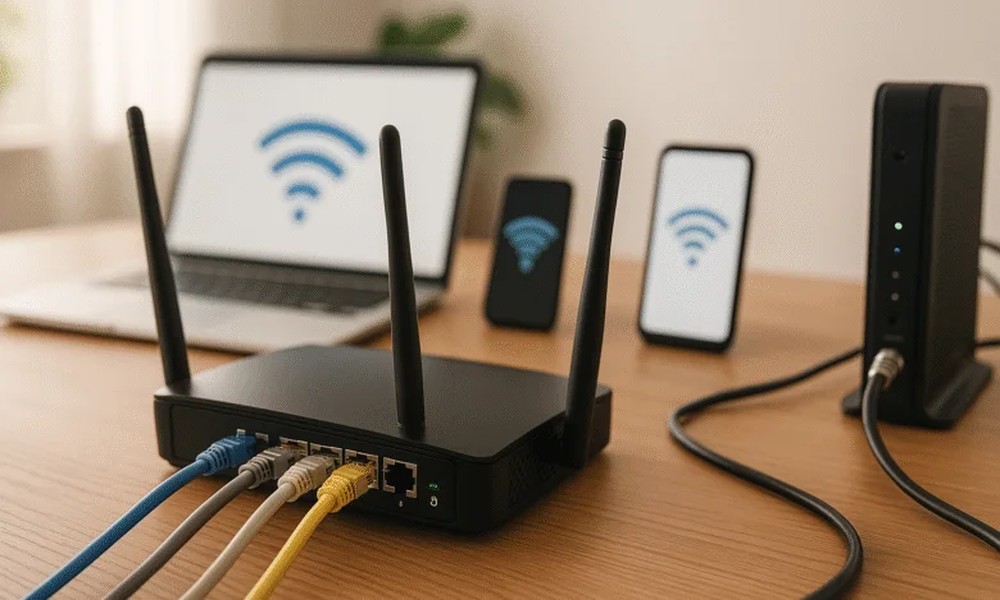
If you’ve ever wondered how your devices connect to the internet, the answer usually starts with one piece of equipment: the router. A router is the central hub of your network. It directs internet traffic between your modem, computers, phones, printers, and other connected devices. Without it, your network simply wouldn’t function properly.
At Link US Online, based in Research Triangle Park, NC and founded in 2011, we help businesses source reliable IT hardware from brands like Cisco, Meraki, Aruba, HPE, and Ubiquiti. And honestly, one of the most misunderstood devices we see is the router.
Key Takeaways
- A router connects devices to the internet and manages network traffic
- Routers improve security and help multiple devices communicate efficiently
- Business-grade routers offer better speed, reliability, and control
- Choosing the right router depends on your internet usage and network size
What Exactly Does a Router Do?
A router takes data from the internet and sends it to the correct device inside your network. Think of it like a traffic controller. Your laptop requests a website, and the router makes sure the response gets back to the right place.
You might be wondering why this matters so much. Well, modern homes and businesses often have dozens of connected devices running at the same time. Phones, smart TVs, cameras, printers, and cloud applications all compete for bandwidth. A good router keeps everything running smoothly.
For businesses, routers become even more important. They help manage security, prioritize traffic, and maintain stable connections for employees and customers.
Different Types of Routers
Not all routers are built the same. Some are designed for basic home internet use, while others are made for enterprise environments.
Wireless Routers
Wireless routers are the most common option today. They allow devices to connect through Wi-Fi instead of cables. Most homes and small offices rely on these because they’re convenient and easy to set up.
Wired Routers
Wired routers connect devices using Ethernet cables. These are often used in offices where stable, high-speed connections are critical.
Business Routers
Business-grade routers from Cisco, Aruba, or Meraki include advanced security features, traffic management tools, and remote monitoring. They’re designed for larger networks with higher demands.
Signs You Need a Better Router
Sometimes internet problems aren’t caused by your service provider at all. Your router could be the issue.
Here are a few common signs:
- Slow speeds during busy hours
- Frequent disconnects
- Weak Wi-Fi coverage
- Trouble connecting multiple devices
- Older hardware that no longer receives updates
An outdated router can also create security risks. That’s something many people overlook until problems start happening.
Choosing the Right Router
The best router depends on how you use your network. A small apartment may only need a basic wireless router, while a growing business may require enterprise-grade hardware with advanced management tools.
At Link US Online, we help organizations save time and reduce costs by sourcing dependable networking equipment that matches their needs without overcomplicating the process.
Conclusion
A router does far more than simply provide Wi-Fi. It manages traffic, improves security, and keeps your entire network connected. Whether you’re setting up a home office or upgrading business infrastructure, choosing the right router can make a major difference in performance and reliability.
As networks continue to grow, reliable hardware becomes increasingly important. Investing in the right router today can prevent a lot of frustration tomorrow.
Frequently Asked Questions
What is the main purpose of a router?
A router directs internet traffic between devices and helps networks communicate efficiently.
Is a modem the same as a router?
No. A modem connects your home or office to the internet, while a router distributes that connection to devices.
How often should you replace a router?
Most routers should be replaced every 3-5 years depending on usage and technology updates.
Do business routers improve security?
Yes. Business-grade routers often include advanced security features and better traffic management.
Can an old router slow down internet speed?
Absolutely. Older routers may struggle with modern internet speeds and multiple connected devices.
This post was written by a professional at Link-Us Online. At Link-Us Online, we understand the power of networking and its potential to improve the efficiency of your business. Our team empowers users to discover and acquire high-quality networking hardware from a diverse range of suppliers. We offer a range of industry-leading solutions from top brands such as Cisco, Meraki, HPE, Juniper, APC, Fortinet, and Ubiquiti. Whether you’re a small business owner seeking reliable equipment for your expanding network or someone in the purchasing department working for universities, real estate management companies, or local governments hunting for specific gear, Link-Us Online is your dedicated ally. Contact us if you are looking to buy Network hardware now!
